
While working on his Master of Architecture thesis in 2007, Kurt launched WebUrbanist as a place to publish design stories oriented toward a broad audience. Both the creator and publication have since been featured in media outlets including The Guardian, CNN, Atlas Obscura, WIRED, and HYPERALLERGIC, as well as ArchDaily, Architizer, The BBC, BoingBoing, BuzzFeed, Citylab, Curbed, FastCompany, FOX, Gawker, Gizmodo, Inhabitat, Mental Floss, Metafilter, MSNBC, Neatorama, NPR, Slashdot, Streetsblog, TECHEBLOG, The Spaces, The TRICI, TIME, and TODAY.
Kurt’s research into and writing on the built environment has been utillized in academic endeavors, including city planning research at MIT and a case study by architecture faculty at UNL. His coverage of urban design is also cited in research journals such as Tunnelling and Underground Space Technology and China Geology. Kurt's analyses of sustainable urban systems and architectural facades have been referenced in further scholarship, from the journal Sustainability: Science, Practice and Policy to ACM human-computer-interaction research.
WU has appeared on university research guides and reading lists at Brown, the University of Chicago, and other schools. Speaking engagements took Kurt as far afield as the Highlands of Scotland, where he gave a keynote speech on abandoned architecture and adaptive reuse at the annual Highlands and Islands Architecture Association (HIAA) award conference.r

Since joining 99% Invisible as the show’s Digital Director in 2015, Kurt has given design talks at events such as Adobe MAX in Los Angeles and Nerd Nite in Oakland. He has also presented at the AIA New York’s Center for Architecture and Cal State Long Beach, on Cities@Tufts, and been featured in industry publications such as ArchDaily.
In 2018, Kurt went on the road with the show’s six-city East Coast tour to stages spanning Atlanta, Durham, Washington, D.C., Boston, Brooklyn, and Manhattan. Along the way, he presented to live audiences about how the invention of Kindergarten catalyzed an era of Modern art and design.
His 99pi essays have also entered the scholarly record: the “Renderings vs. Reality” series is cited in AGATHÓN, an international peer-reviewed journal of architecture and design; his essay on Las Vegas’s “ducks” and “decorated sheds” appears in the pages of philosopher Mark Kingwell’s The Ethics of Architecture (Oxford University Press); and “Least Resistance,” his first story for show, turned up in peer-reviewed research on “digital desire paths” — the idea of a “desire path” would also evolve to become the framing metaphor for his first book: The 99% Invisible City.
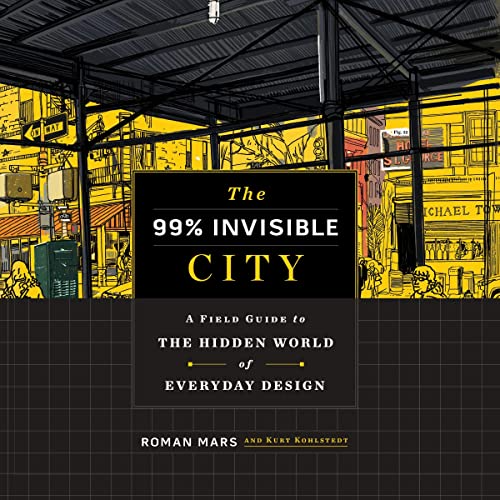
Kurt was the primary writer of a critically acclaimedbook about the built world co-authored with show host Roman Mars and published in 2020. The 99% Invisible City: A Field Guide to the Hidden World of Everyday Design was an overnight bestseller and a Financial Times best book of 2020, with a glowing review in The New York Times, starred reviews from both Kirkus and Booklist, and coverage from sources including The Architect’s Newspaper, Smithsonian, Metropolis, The New York Post, SF Weekly, Fast Company, Slate, and the Los Angeles Review of Books.
Substantive independent reviews also appeared in Spacing, AIA Minnesota’s ENTER, Books on Cities, Inside Higher Ed, and Geography Realm. On the air, the book made the rounds of NPR’s All Things Considered, The Indicator from Planet Money, and Bullseye with Jesse Thorn, as well as Science Friday, KQED Forum, CBC’s The Current, and MPR News. A few years after publication, the book was named a Kyoto Global Design Awards laureate in design theory.
The book has also been adopted into university library core collections from coast to coast across the United States, assigned as a graduate-level text in urban design studios and discussed by professional planner groups. It has also been cited in doctoral theses and peer-reviewed scholarship spanning disciplines including law, ethnography, and architectural heritage.
In 2025, as part of a twelve-part 99pi web and audio project titled Adapt or Design, Kurt developed a free one-handed keyboard system for people with physical impairments — he designed and implemented this open-source solution after a debilitating injury rendered his (dominant) right hand unable to type. AoD has been featured on Articles of Interest and HackaDay, syndicated by WNYC, recommended by Parkinson’s communities as well as digital-accessibility organizations; it has also been cited on gaming accessibility forums as a definitive guide to one-handed living.
As a young adult, Kurt worked professionally on residential, industrial, theatrical, furniture, graphic and web design projects. He spent years doing carpentry and construction between undergrad and grad schools, before becoming a teaching assistant for multiple courses in architecture and urban design. Upon completing his professional degree, he gave himself three months to turn a rent-paying profit on his first design publication. He hit that mark and never looked back.